 PRINCE FABRICATION
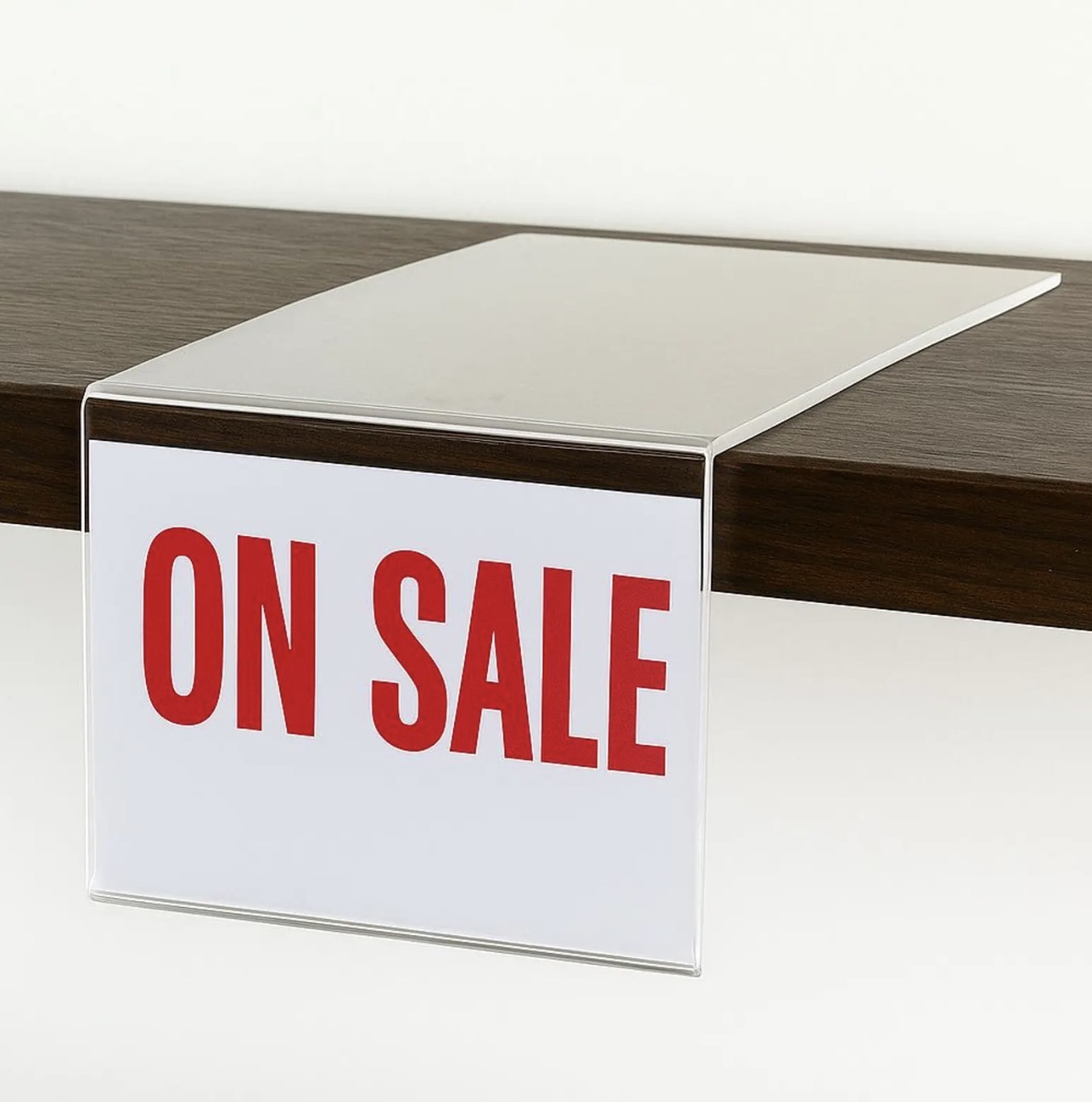
Shelf talkers are one of retail's most underestimated tools. They're small, they're quiet, and most shoppers never consciously notice them â but when a product is displayed with a clean acrylic shelf talker, it sells differently than one sitting bare on a shelf.
Here's what you need to know about shelf talkers, how they work, and how to use them to give your products the attention they deserve.
What Is a Shelf Talker?
A shelf talker is a small sign holder â typically made from acrylic or another clear material â that sits in front of or attaches to a retail shelf to display a price tag, product name, promotion, or other messaging.
You've seen them everywhere: the clear holders in front of wine bottles at a grocery store, the angled cards at beauty counters, the sign clips on pharmacy shelving. They're standard in commercial retail for a simple reason â they direct attention without getting in the way of the product itself.
Why Shelf Talkers Work
The average shopper spends less than 7 seconds at a shelf before making a decision. In that window, a product needs to communicate its name, its price, and something that makes it worth picking up.
A bare shelf edge provides none of that context. A shelf talker gives your product the information layer it needs to close the sale without you standing there to explain it.
The benefits stack quickly:
- Professionalism. Custom acrylic holders signal that you take your presentation seriously. They make a boutique look like a boutique.
- Flexibility. Change your pricing or messaging by swapping the printed insert â the holder stays on the shelf.
- Durability. Acrylic doesn't curl, fade, or absorb moisture. It wipes clean and holds its shape for years.
Choosing the Right Size
Shelf talkers typically run from 2Ã3 to 4Ã6 inches, with 4Ã6 being the most common for general retail signage. The right size depends on what you need to communicate:
- Price only: 2Ã3 is plenty. You're displaying a number.
- Name + price: 3Ã4 or 4Ã4 gives you room for branding alongside the price.
- Promotional messaging: 4Ã6 or larger if you want a tagline, feature callouts, or a small image.
Sizing also depends on your shelf depth and product height. A shelf talker shouldn't tower over the product it's promoting, and shouldn't extend so far off the shelf edge that it becomes a hazard. As a general rule, keep the holder height at 60â75% of the product's visible face height.
Acrylic vs. Paper Holders: Why Material Matters
Paper card holders get the job done, but they degrade quickly. After a few weeks of foot traffic â cleaning cycles, product restocking, casual handling â a paper holder starts to curl, yellow, or split at the edges.
Acrylic holds up. It's easy to wipe clean, doesn't absorb moisture, and stays rigid and clear for years. The frosted edge finish that quality laser or saw cutting produces gives it a premium look that paper simply can't replicate.
For any display that's going to be semi-permanent â a weekly staple on your floor rather than a single-use promotion â acrylic is the better investment, and the per-unit cost difference is smaller than most people expect.
Getting Custom Sizes Right the First Time
Off-the-shelf acrylic holders come in standard sizes. If your inserts are non-standard, or you're working with unusual shelf configurations, a custom-cut holder ensures everything lines up correctly from day one.
The key specs to nail down before ordering:
- Interior pocket dimensions â the insert size, not the holder's outside dimensions
- Base depth â how far back from the shelf edge you need the holder to sit
- Orientation â portrait vs. landscape
- Pocket depth â how much of the insert the holder should grip
Placement: Where and How to Use Them
Shelf talkers work best when they're consistent and deliberate. A few placement principles worth following:
- Front edge, not back. Place holders at the very front lip of the shelf so they're visible from the aisle without a shopper having to step forward.
- One holder per product SKU. Cramming multiple holders together defeats the purpose â each one should direct attention to one specific item.
- Eye level first. Eye-level shelving moves product fastest. If you have limited inventory of holders, start there.
- Keep inserts updated. An outdated price or "sale" message damages trust faster than no sign at all. Set a recurring review date.
The Bottom Line
Shelf talkers are a small investment with outsized return. They're the difference between a product that sits and a product that sells. And when you're using custom acrylic â the right size, the right material, fabricated cleanly â they also say something about the brand behind the product.
If you're sizing up a run of shelf talkers for a new location, a seasonal push, or just to get your current shelving looking sharp, we're happy to help you spec them correctly and get them out fast.